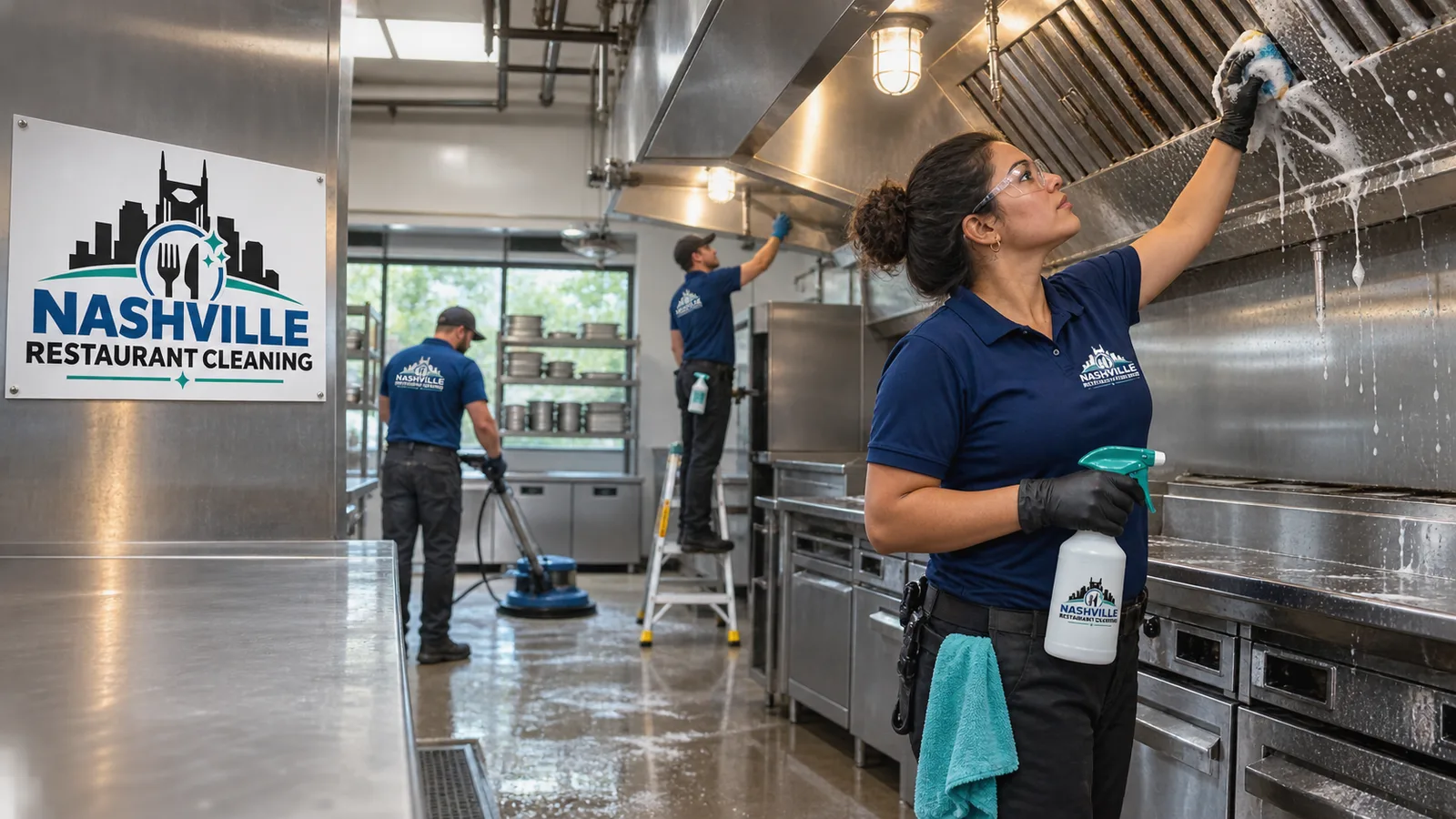
A trained commercial cleaning crew deep cleaning stainless steel equipment and overhead surfaces in an empty Hendersonville restaurant kitchen.

Restaurant Kitchen Cleaning · Hendersonville

Restaurant Kitchen Cleaning in Hendersonville

Remove grease, food residue, and hard-to-reach overhead buildup with a cleaning scope planned around your kitchen, equipment, and operating schedule.

✓Site-specific scope

✓Grease and residue removal

✓High dusting available

✓Scheduled around operations

Kitchen-specific planning

Detailed Restaurant Kitchen Cleaning Hendersonville Operators Can Schedule With Confidence

Restaurant Kitchen Cleaning Hendersonville service should address the areas routine closing work cannot fully cover. Grease settles behind cooking equipment, residue collects around casters and legs, and dust clings to pipes, ledges, vents, and other overhead surfaces. Left in place, that buildup can create odors, soil nearby surfaces, and make the kitchen harder for staff to maintain.

Nashville Restaurant Cleaning plans the work around the actual room rather than applying one generic checklist. Before setting the scope, Nashville's trusted restaurant team reviews access, surface materials, soil levels, equipment placement, and operating constraints. Our office is on Armory Drive in Nashville, giving our crew a practical base for scheduled work in Hendersonville and the surrounding area.

The goal is a cleaner, more manageable commercial kitchen without disrupting service more than necessary. Work can be coordinated during a closed day, after the last shift, or within another agreed access window. Before cleaning starts, the restaurant should identify surfaces that are hot, energized, fragile, or restricted, along with any equipment that cannot be moved.

Request a Callback

Equipment and work zones

What a Restaurant Kitchen Cleaning Scope Can Cover

Request a Callback

Cooking-Line Exteriors

Degreasing can address exterior panels, sides, legs, casters, control surrounds, and accessible spaces around ranges, fryers, ovens, grills, and holding equipment. Staff should cool and shut down equipment according to manufacturer procedures before access.

Floors, Edges, and Low Areas

Cleaning can target greasy traffic lanes, corners, base edges, accessible floor-wall junctions, and soil beneath movable equipment. The method and chemistry are matched to the flooring and residue.

Prep and Warewashing Areas

Accessible counters, sink exteriors, shelving, splash zones, wall surfaces, and equipment exteriors can be detailed after food, utensils, and loose supplies are removed or protected.

Walls, Doors, and Touchpoints

Washable walls, door faces, handles, push plates, and other high-contact areas receive attention according to their material and condition.

Overhead Dust and Grease

High dusting can remove dry dust, cobwebs, and accessible greasy film from pipes, conduit, ledges, ceiling fixtures, and the exterior faces of vents.

Storage-Space Cleaning

Empty, accessible shelving and floor areas can be cleaned once restaurant staff remove food, packaging, chemicals, and other stored goods.

Controlled overhead cleaning

Restaurant High Dusting in Hendersonville

High dusting addresses buildup that ordinary mops and hand wiping cannot safely reach. In a working kitchen, airborne grease can combine with dust on pipework, conduit, structural ledges, ceiling fans, light exteriors, vent faces, and the tops of tall fixtures. When disturbed, loose material may fall onto lower surfaces, so the work requires controlled access and a deliberate top-down sequence.

Before Restaurant High Dusting Hendersonville work begins, food and food-contact items should be removed, sealed, or fully protected. The crew then establishes a controlled work area, uses suitable extension tools or access equipment, and captures loosened residue rather than brushing it into the room. Damp wiping or degreasing may follow where the surface can tolerate it. Lower surfaces and floors are cleaned after overhead work is complete.

High dusting has clear limits. It is not exhaust-system cleaning, internal duct cleaning, electrical repair, ceiling restoration, or fire-suppression maintenance. Hood plenums, fans, ducts, and other parts of a commercial cooking exhaust system require a separate qualified scope. A walkthrough identifies what is safely accessible and which areas should be handled by another specialist.
Request a Callback
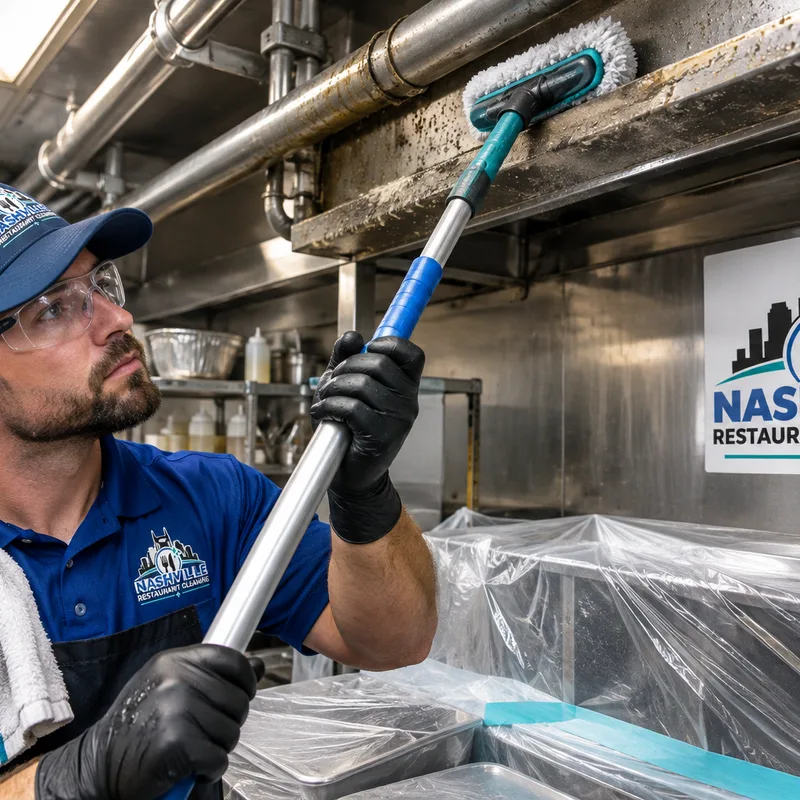
A commercial kitchen cleaner using an extension tool to remove dust and greasy residue from exposed overhead pipes and ledges while food-preparation surfaces remain protected.
A controlled top-down sequence helps keep loosened overhead residue from resoiling completed lower areas.

Assessment to inspection

How We Plan and Complete the Cleaning

  1. 01

    Review the Kitchen and Priorities

    We discuss the cooking line, prep areas, warewashing space, overhead surfaces, storage zones, access limits, and the buildup causing concern. Photos may help with initial planning, while a walkthrough can clarify a more involved scope.

  2. 02

    Define Responsibilities and Timing

    The written scope identifies included surfaces, excluded systems, the access window, and preparation expected from restaurant staff. This includes cooling equipment, removing food and loose goods, and arranging approved access.

  3. 03

    Protect Sensitive Areas

    Before cleaning, food-contact items and vulnerable surfaces are removed or protected as appropriate. Cleaning solutions are kept away from incompatible materials, open food, controls, and restricted electrical components.

  4. 04

    Clean From High Areas Down

    Overhead dusting is completed before detailed work on equipment exteriors, washable walls, shelving, edges, and floors. This sequence prevents loosened debris from resoiling completed lower areas.

  5. 05

    Inspect the Agreed Scope

    The crew reviews accessible cleaned areas, notes any condition that could not be corrected through cleaning, and leaves the work area ready for the restaurant's reopening procedures.

Request a Callback
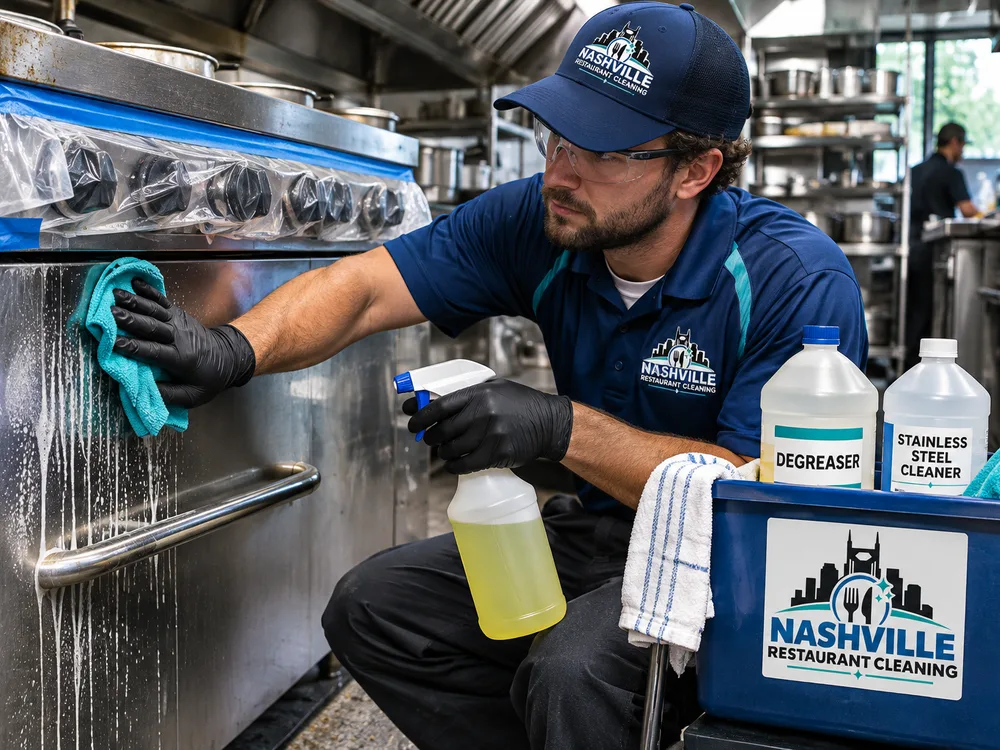
Close view of a technician carefully degreasing a stainless steel restaurant appliance exterior with protected controls and labeled commercial cleaning supplies nearby.
Cleaning methods are matched to the surface, soil, controls, and surrounding work area.

Surface-aware methods

Methods Chosen for Commercial Kitchen Surfaces

Heavy grease does not justify using the strongest chemical on every surface. Stainless steel, painted metal, plastic, tile, grout, sealed flooring, and unfinished overhead materials react differently to heat, moisture, abrasion, and alkalinity. Product labels, dwell times, dilution directions, and surface compatibility guide the method.

Degreasing usually starts with dry removal of loose debris, followed by controlled chemical application where appropriate. The product needs enough dwell time to soften the soil without drying on the surface. Agitation and wiping lift the residue, and any required rinsing removes remaining cleaner. Stainless steel is finished with the grain to reduce visible scratching. Porous grout and textured flooring may need repeated passes because grease settles into recesses.

Restaurant staff remain responsible for sanitation procedures required for food-contact surfaces before production resumes. Cleaning removes visible soil, while sanitizing uses an approved product at its labeled concentration and contact time. Keeping those steps distinct helps the restaurant follow its own food-safety plan and manufacturer instructions.

Request a Callback

Local scheduling realities

A Practical Scope for Hendersonville Restaurants

Restaurants near Indian Lake Boulevard often operate alongside retail, entertainment, and evening dining traffic, which can limit daytime access. Main Street businesses may have tighter loading and equipment-movement constraints in established commercial spaces. Restaurants closer to Vietnam Veterans Boulevard may favor overnight or closed-day scheduling because that corridor connects Hendersonville with the wider Nashville area. These operating details affect arrival planning and the amount of uninterrupted time available for detailed work.

Middle Tennessee's warm, humid months can also make greasy residue feel tackier and more difficult to manage in busy cooking spaces. Heavy air-conditioning use may add dust around accessible vent faces and overhead fixtures. The cleaning plan should respond to the actual buildup rather than assume every kitchen needs the same treatment.

A useful proposal states which rooms and surfaces are included, whether movable equipment must be repositioned, who handles food and smallwares, and whether high access requires special equipment. It should also identify exclusions such as internal exhaust components, pest remediation, mold removal, repairs, and hazardous-material work. Clear boundaries protect the restaurant's schedule and give managers a realistic basis for approval.

Request a Callback

Scope and pricing

How Much Does Restaurant Kitchen Cleaning Cost in Hendersonville?

Restaurant kitchen cleaning in Hendersonville typically ranges from about $500 to $2,500 for a scheduled deep clean, while large kitchens, heavy grease, extensive high dusting, or multi-shift work may cost more. A smaller targeted cleaning usually falls toward the lower end; a full cooking line and overhead scope falls higher.

Price changes with kitchen size, buildup, access height, equipment movement, surface condition, crew timing, and the areas included. Photos can support early planning, but the exact cost is confirmed after the kitchen and requested scope are reviewed.

Request a Callback

Before you schedule

Questions Restaurant Managers Ask Before Scheduling

Can restaurant kitchen cleaning be scheduled when we are closed?+

Yes, cleaning can be planned for an agreed closed-day or after-hours access window when scheduling allows. Hendersonville restaurants with busy service periods near Indian Lake Boulevard often benefit from setting aside uninterrupted access. Equipment must be cooled and shut down according to restaurant and manufacturer procedures before work begins.

Does the service include commercial hood and exhaust duct cleaning?+

No, general kitchen cleaning and high dusting do not include internal hood plenums, exhaust fans, or ductwork unless those items are expressly covered by a separate qualified scope. Exterior hood surfaces and accessible surrounding areas may be included. Managers should confirm exhaust-system requirements independently and keep the resulting service records.

What should our staff do before the crew arrives?+

Staff should remove or seal food, clear smallwares and personal items, empty included shelving, cool cooking equipment, and identify restricted surfaces. The restaurant should also provide approved access and explain shutdown or lockout requirements. A preparation list can be matched to the Hendersonville location before the service date.

Can you clean while kitchen equipment remains in place?+

Yes, many accessible surfaces can be cleaned with equipment in place, but fixed or closely spaced units limit reach. Light equipment may be moved only when the scope, connections, weight, and floor conditions permit it. Gas lines, hardwired equipment, and complex utility connections should be handled by qualified personnel.

How long does restaurant kitchen cleaning take?+

A targeted job may take several hours, while a full kitchen with heavy grease and overhead work may require a full shift or more. Kitchen size, access height, soil condition, equipment density, and the time needed to protect food-contact areas drive the schedule. The expected work window is set after reviewing the scope.

How often should high dusting be scheduled?+

The interval should be based on visible accumulation, cooking volume, ceiling configuration, ventilation, and the restaurant's maintenance plan. Open ceilings and exposed pipework often need closer monitoring because buildup is easy to miss during daily cleaning. Managers should inspect overhead areas regularly and schedule service before residue begins falling onto lower surfaces.

Can restaurant cleaning remove every stain and damaged area?+

No, cleaning removes soil but cannot reverse corrosion, failed coatings, etched metal, deteriorated grout, or permanent discoloration. A pre-service review helps separate removable grease from material damage. Areas needing repair or replacement can be documented rather than treated repeatedly with harsher chemicals.

Give us the kitchen layout, operating window, and problem areas. We will help define a practical scope for grease removal, detailed cleaning, and overhead dusting.

Call for a Free Quote

Define the next cleaning

Plan a Cleaner Hendersonville Restaurant Kitchen

Tell Nashville Restaurant Cleaning what is collecting buildup, which areas need attention, and when the kitchen is available. We will outline the preparation, access needs, included work, and scheduling expectations before service begins.

Plan your cleaning

Ready for a Cleaner Restaurant?

Tell us about your restaurant, priority areas, and preferred schedule. We will help define a practical cleaning scope for your Nashville property.

Request a quote

Get a Restaurant Cleaning Quote

After you submit the form, our team will review your details and contact you to discuss the property, scope, and scheduling.