A professional cleaner detailing tables and floors in a polished Nashville restaurant dining room after closing.

Restaurant Cleaning · Nashville

Restaurant Cleaning Services in Nashville

Detailed recurring cleaning for dining rooms, bars, restrooms, floors, and back-of-house spaces, scheduled around your operating hours.

✓Facility-specific scope

✓Front and back of house

✓High dusting available

✓Scheduled around operations

Facility-specific planning

A Cleaner Restaurant, Shift After Shift

Restaurant Cleaning Services should support the way your operation actually runs. Guests see the dining room, bar, entry, and restrooms, while employees depend on clean service lanes, prep areas, and back-of-house floors. Each area has different surfaces, soil loads, and timing requirements. A practical cleaning scope accounts for all of them without disrupting opening, closing, deliveries, or prep.

Nashville's restaurant districts bring different operating pressures. Broadway and The Gulch often deal with heavy foot traffic and late-night turnover. Germantown restaurants may have patios and street-facing entries that track in outdoor debris. East Nashville dining rooms range from compact neighborhood spaces to busy bars, while Green Hills establishments often need quiet work completed around retail and dinner schedules. Humid summers can also make entry glass, restroom touchpoints, and floors show residue quickly.

Nashville Restaurant Cleaning builds service around the facility rather than applying one checklist to every property. Before setting the scope, Nashville's local restaurant service assesses traffic patterns, surface types, access, closing procedures, and areas that need special attention. The result is a clear routine your managers can verify.

Request a Callback

Operational areas

Restaurant Cleaning Services for Every Operational Area

Request a Callback

Restaurant Dining Room Cleaning

Dining area cleaning can include tables, chair frames, booths, ledges, partitions, baseboards, entry glass, host stations, and reachable fixtures. Work is planned to remove crumbs, fingerprints, dust, and spills without leaving sticky residue or strong odors.

Restaurant Bar Cleaning

Bar cleaning addresses counters, stools, fronts, foot rails, shelving exteriors, service wells, mirrors, and nearby floors. High-touch areas receive careful attention, and surface-compatible products are used around wood, metal, stone, glass, and sealed finishes.

Restaurant Floor Cleaning

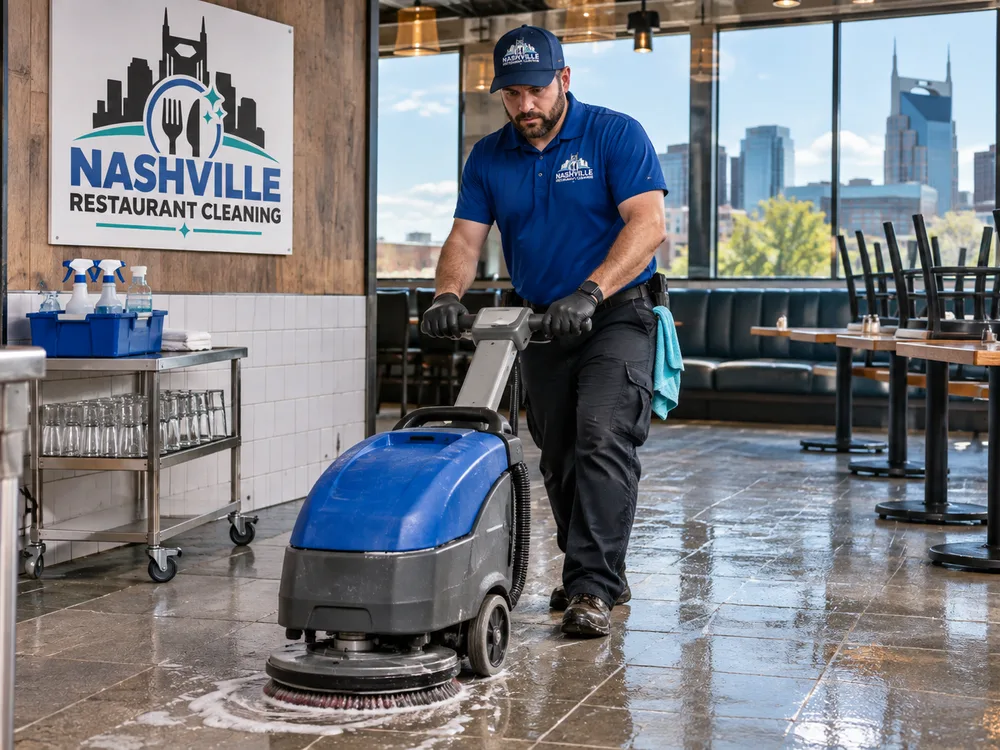
Floor care is matched to the material and soil. Vacuuming, sweeping, damp mopping, machine scrubbing, and detail work around edges may be used for carpet, resilient flooring, sealed concrete, tile, and grout.

Restaurant Restroom Cleaning

Restrooms are cleaned with separate tools and a defined sequence. Toilets, urinals, sinks, partitions, dispensers, mirrors, touchpoints, floors, and waste receptacles can be addressed on every scheduled visit.

Front Of House Cleaning

Front-of-house cleaning focuses on guest-facing presentation, including entrances, waiting areas, service stations, dining spaces, bars, interior glass, and restrooms. Priorities can change for events, patio season, and high-volume weekends.

Back Of House Cleaning

Back-of-house work may cover staff corridors, storage-area floors, break spaces, washable wall surfaces, doors, baseboards, and accessible equipment exteriors. Food-contact surfaces and specialized kitchen systems should be identified during scoping.

Above the normal wiping zone

High Dusting That Reaches the Missed Areas

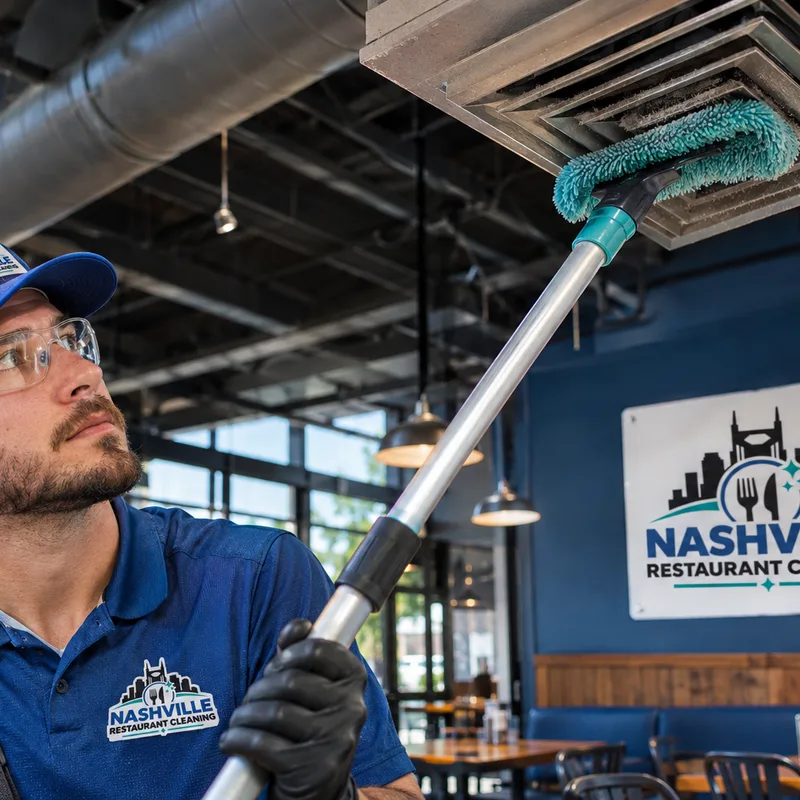
High dusting removes buildup from surfaces outside the normal wiping zone. In restaurants, that may include vents, pipes, beams, pendant fixtures, ceiling fans, signs, ledges, wall décor, and the tops of partitions or cabinets. Dust in these locations can become visible under dining-room lighting or settle onto lower surfaces after routine cleaning.

The method depends on height, access, and the material being cleaned. Extension tools fitted with microfiber or dust-capture attachments work well for many reachable surfaces. HEPA-filtered vacuum attachments may be appropriate where loose dust needs to be captured rather than pushed into the room. Ladders or other access equipment require a clear work area and must be planned around tables, bar fixtures, and employees.

High dusting is often scheduled less frequently than nightly cleaning. A site review identifies which surfaces belong on a weekly, monthly, or periodic rotation. Greasy buildup near cooking areas may require a different method than dry dust in a dining room, and delicate décor should be documented before work begins.

Request a Callback
A trained restaurant cleaner using an extension tool with a microfiber attachment to remove dust from exposed ceiling fixtures and vents.
Planned high dusting captures buildup from vents, fixtures, ledges, and other elevated surfaces.

Assessment to review

How We Build a Reliable Restaurant Cleaning Plan

  1. 01

    Walk Through the Facility

    We review the dining room, bar, restrooms, entry, floor materials, service stations, and back-of-house access. Managers can point out recurring trouble spots, restricted areas, alarm procedures, and timing limits.

  2. 02

    Define the Scope and Frequency

    Each task is assigned a frequency, such as every visit, weekly, or periodic. The written scope distinguishes routine work from high dusting, machine floor care, detail cleaning, and other scheduled tasks.

  3. 03

    Plan Around Operations

    Service can be arranged around closing, opening preparation, deliveries, and employee access. Downtown properties may need added planning for loading access and late-night activity, while neighborhood restaurants may have tighter noise or parking considerations.

  4. 04

    Clean in a Controlled Sequence

    Crews generally work from cleaner areas toward heavier-soil areas and from higher surfaces toward floors. Restroom tools remain separate, chemicals are used according to their labels, and visible residue is addressed before the work is completed.

  5. 05

    Review and Adjust

    Managers need a practical way to report spills, event-related needs, or a missed task. The scope can be adjusted when traffic, hours, floor condition, or room use changes.

Request a Callback
A restaurant cleaning professional using a compact floor scrubber on a hard-surface dining room floor with tables safely moved from the work path.
Floor-care methods are matched to the material, traffic pattern, and type of soil.

Material-specific floor care

Floor Care Based on Material, Traffic, and Soil

Restaurant Floor Cleaning requires more than using the same mop throughout the building. Dining-room crumbs, drink spills, tracked-in grit, and greasy back-of-house soil behave differently. Moving soil from one area to another can leave haze, odor, or a slippery film, so equipment and cleaning solution should be matched to the zone.

Tile and grout often need edge work where soil gathers near walls and equipment. Sealed concrete may show drink residue and traffic lanes. Resilient flooring can be damaged by excessive chemical strength or abrasive treatment. Carpeted dining areas need thorough vacuuming, spot treatment, and periodic extraction based on fiber type, backing, and drying conditions.

Nashville's frequent rain and seasonal pollen can increase debris at entries and on hard floors. Walk-off mats help, but they also require regular vacuuming and cleaning. A floor plan should account for entrances, host stands, bar perimeters, paths to restrooms, and service lanes rather than treating the room as one uniform surface.

Request a Callback

Complete operational coverage

Guest-Facing Detail With Back-of-House Discipline

Restaurant Front Of House Cleaning in Nashville should leave the room ready for inspection under normal service lighting. That means looking beyond tabletops. Chair legs, booth seams, menu holders, baseboards, ledges, door glass, and the floor beneath movable furniture can all affect the first impression. Cleaning products also need suitable dwell time where disinfection is part of the scope, followed by any rinsing required by the product label.

Restaurant Restroom Cleaning in Nashville needs its own color-coded or otherwise separated tools to reduce cross-contamination. A repeatable routine covers fixtures first, then partitions and touchpoints, followed by floors and waste. Supply replenishment can be included when the restaurant provides the paper goods, liners, soap, or other consumables and storage access is established.

Restaurant Back Of House Cleaning in Nashville requires clear boundaries. General janitorial work may cover accessible floors, doors, walls, shelving exteriors, break areas, and waste handling points. Hood and exhaust-system cleaning, grease-trap service, pest control, and work inside food-production equipment are specialized tasks and should not be assumed to be part of routine janitorial cleaning. Defining those boundaries protects the restaurant, its staff, and the cleaning crew.
Request a Callback

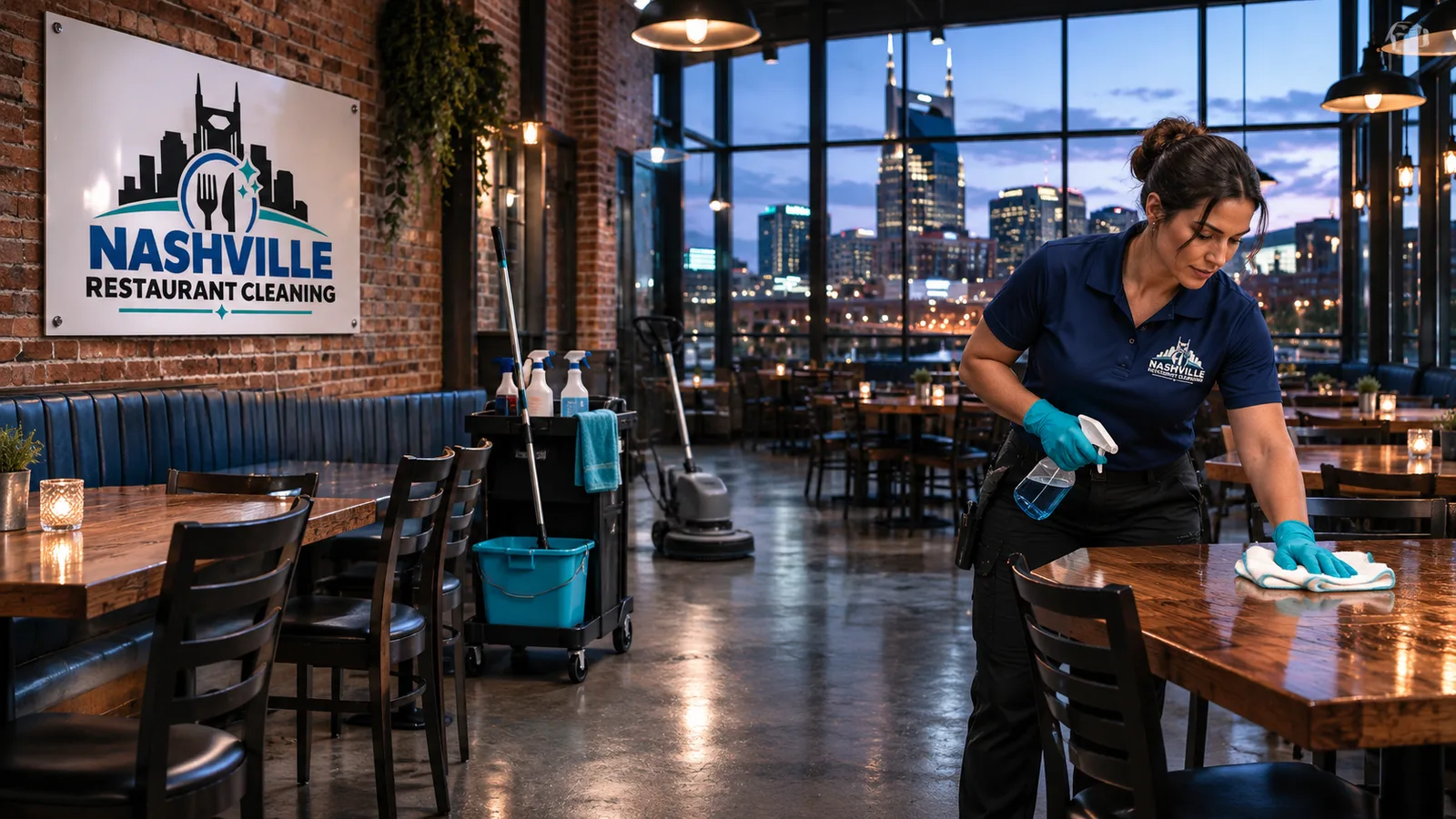
A written cleaning scope gives managers a clear standard for dining areas, restrooms, floors, high dusting, and back-of-house work before service begins.

Call for a Free Quote

Before you schedule

Questions About Restaurant Cleaning in Nashville

How much do Restaurant Cleaning Services cost in Nashville?+

Restaurant cleaning is usually priced after a walkthrough because square footage alone does not show the true workload. Frequency, operating hours, floor materials, restroom count, bar service, kitchen-adjacent soil, high dusting, access, and the condition at startup all affect the quote. A compact dining room with nightly service has a different labor profile than a late-closing Broadway venue with several bars and heavy weekend traffic. The exact price and task schedule should be confirmed in a written scope.

Can cleaning be scheduled after our restaurant closes?+

Yes, service can often be scheduled after closing or before opening, subject to crew availability and building access. The plan should account for employees finishing side work, alarm procedures, locked areas, deliveries, and any time when wet floors must remain undisturbed. Late-night restaurants in Downtown Nashville may also need a specific entry and loading plan.

What is included in Front Of House Cleaning?+

Front-of-house cleaning typically includes the entrance, host area, dining room, bar exterior, service stations, guest-facing glass, restrooms, furnishings, touchpoints, and floors. The exact scope may add booth detailing, baseboards, reachable fixtures, high dusting, or patio-related entry care. Every included task and frequency should be stated before recurring service starts.

Do you clean restaurant kitchens and back-of-house areas?+

General back-of-house cleaning can include accessible floors, staff spaces, doors, washable wall areas, storage-area floors, and equipment exteriors when those tasks are included in the scope. Specialized hood cleaning, grease-trap pumping, pest treatment, and dismantling food equipment are separate trades. A walkthrough establishes the boundary between routine janitorial work and specialized maintenance.

How often should restaurant floors receive machine cleaning?+

The right frequency depends on the flooring, foot traffic, spill patterns, soil type, and current finish condition. A high-volume bar perimeter may need machine scrubbing more often than a low-traffic carpeted private dining room. Nashville rain and pollen can also increase entry soil, so seasonal adjustments may be useful. The schedule should follow an inspection of each floor zone.

Can high dusting be added to recurring restaurant cleaning?+

Yes, high dusting can be placed on a periodic rotation within a recurring plan. The walkthrough identifies vents, beams, pipes, fans, signs, fixtures, and ledges that can be reached safely with suitable equipment. Sensitive décor, surfaces near food preparation, and areas requiring special access need to be documented before the work is scheduled.

How quickly can recurring Restaurant Cleaning Services begin?+

Start timing depends on crew availability, facility size, access requirements, and whether an initial deep clean is needed. The process normally begins with a walkthrough at the Nashville property, followed by a written scope and schedule. Restaurants with an opening date, management transition, event, or failed current arrangement should share that deadline during the initial discussion.

Define your next service

Set a Clear Cleaning Standard for Your Restaurant

Tell Nashville Restaurant Cleaning about your hours, facility layout, floor types, and problem areas. We will assess the space and outline a practical scope for recurring or detailed service.

Plan your cleaning

Ready for a Cleaner Restaurant?

Tell us about your restaurant, priority areas, and preferred schedule. We will help define a practical cleaning scope for your Nashville property.

Request a quote

Get a Restaurant Cleaning Quote

After you submit the form, our team will review your details and contact you to discuss the property, scope, and scheduling.