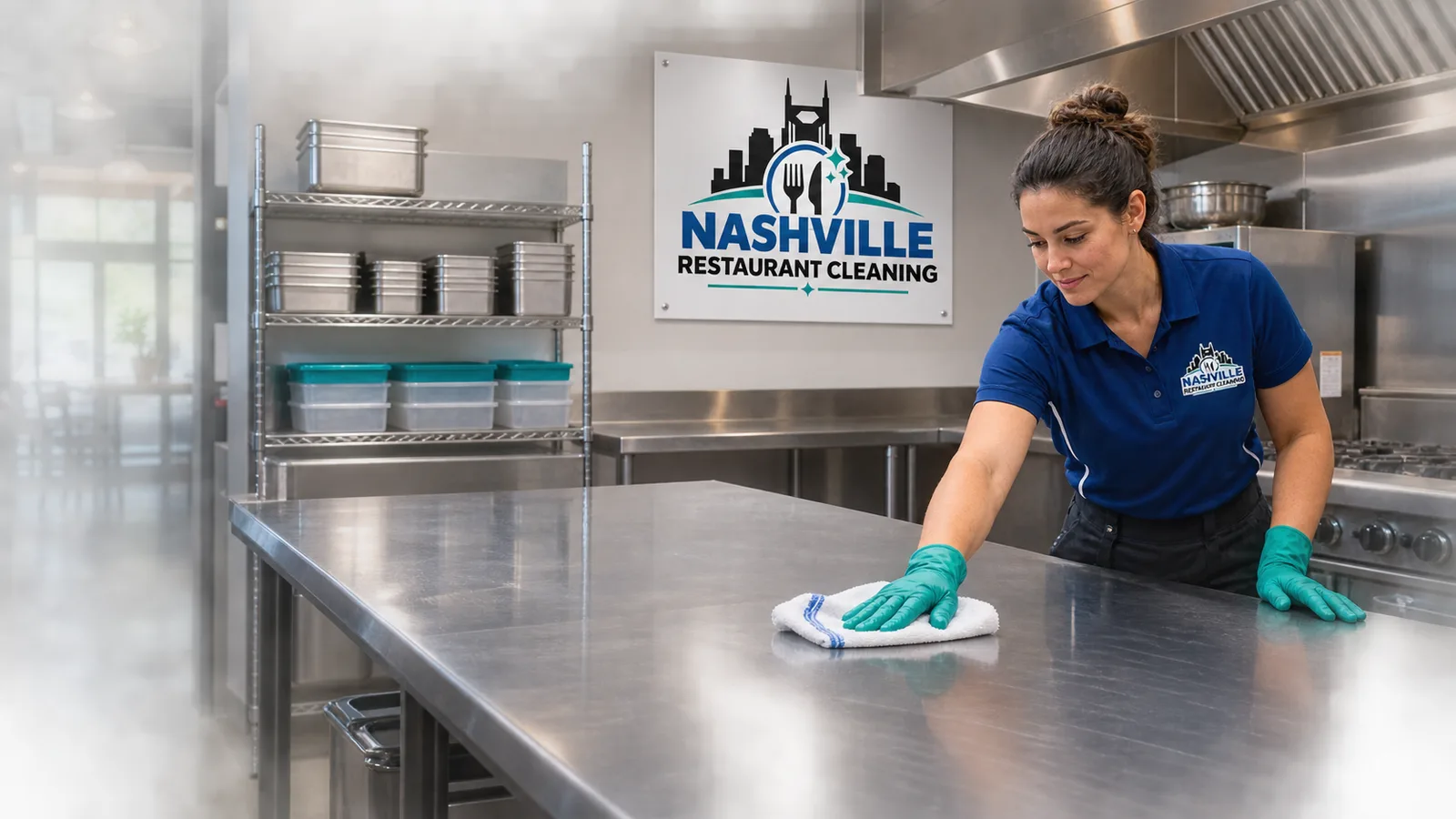
A professional cleaner wiping a stainless steel prep table in a spotless Smyrna restaurant kitchen while food-contact items remain safely stored.

Restaurant Cleaning · Smyrna

Restaurant Cleaning Smyrna

Dependable cleaning for commercial kitchens, dining rooms, restrooms, and guest-facing areas, scheduled around your operating hours.

✓Written task lists

✓Kitchen and guest areas

✓Food-safety planning

✓Scheduled around operations

Cleaning planned for your operation

A Cleaner Restaurant, Ready for the Next Shift

Restaurant Cleaning Smyrna requires a different approach than ordinary office or retail cleaning. Grease travels, crumbs collect beneath fixed equipment, and high-touch surfaces need attention without disrupting food, staff, or service. Nashville Restaurant Cleaning builds the scope around your floor plan, hours, cooking volume, and existing opening and closing duties.

Our restaurant specialists serving Nashville and nearby communities use written task lists to make recurring work clear. Before service begins, we identify food-contact surfaces, non-food-contact surfaces, chemical storage expectations, access instructions, and areas that require extra attention. That preparation helps the cleaning crew work safely and gives managers a practical way to review completed work.

Located at 2945 Armory Drive in Nashville, our team serves restaurants in Smyrna, where Sam Ridley Parkway supports a dense mix of restaurants and retail businesses. We also account for the different demands around Interstate 24, where convenient highway access can drive steady traffic, and the historic Depot District, where dining spaces may have distinct layouts or limited service windows. The cleaning plan follows the operation rather than forcing every restaurant into the same checklist.

Request a Callback

Restaurant work zones

What Restaurant Cleaning Services in Smyrna Can Cover

Request a Callback

Commercial Kitchen Areas

Degreasing and cleaning can include floors, walls, washable surfaces, equipment exteriors, prep-area fixtures, sinks, and accessible spaces beneath or beside movable equipment. Food and utensils must be protected or removed before chemicals are used nearby.

Dining Rooms and Entry Areas

Service may include vacuuming or mopping floors, spot-cleaning glass, wiping tables and chairs, cleaning ledges, and addressing fingerprints on doors. Attention to edges and furniture bases helps prevent soil from building up between shifts.

Restrooms

Restroom cleaning addresses toilets, urinals, sinks, mirrors, partitions, touchpoints, dispensers, and floors. Products and tools should be kept separate from those used in kitchens or dining areas to reduce cross-contamination.

Bars and Beverage Stations

Cleaning can cover floor mats, equipment exteriors, cabinet fronts, splash areas, accessible shelving, and non-food-contact surfaces. Staff should first secure garnishes, glassware, open containers, and beverage ingredients.

High-Touch Surfaces

Door handles, push plates, railings, restroom fixtures, host stands, and other frequently handled points can be included in the written scope. Cleaning removes soil before an appropriate disinfectant is applied where needed.

Periodic Detail Work

Baseboards, vents, wall splatter, floor edges, furniture undersides, and accessible spaces behind movable items can be rotated into deep-clean visits. This keeps recurring service focused while preventing neglected areas from deteriorating.

Controlled tools and methods

Kitchen Cleaning Built Around Food-Safety Practices

A sound commercial kitchen process separates cleaning from sanitizing. Cleaning removes grease, food residue, and other soil. Sanitizing follows on clean food-contact surfaces using an appropriate product at the label dilution and required contact time. A sanitizer cannot work as intended when residue remains beneath it.

Color-coded cloths, mop heads, buckets, and brushes can help keep restroom tools away from kitchen and dining areas. Chemicals should remain labeled, stored apart from food, and used according to the manufacturer's directions. Safety Data Sheets should also be accessible to the employer and staff as required for workplace chemical handling.

Some equipment needs specialized care. Cooking equipment should be cool and safely shut down before cleaning begins. Electrical components, gas connections, pilot assemblies, fire-suppression equipment, and inaccessible internal parts are not treated like ordinary washable surfaces. Exhaust hood and duct cleaning also requires a distinct scope and qualified service because it concerns grease accumulation inside the ventilation system.

Restaurants operating in Smyrna fall under Tennessee food-service requirements and local oversight. A professional cleaning crew supports the restaurant's sanitation program, but management remains responsible for food handling, equipment procedures, employee practices, and required inspections.

Request a Callback
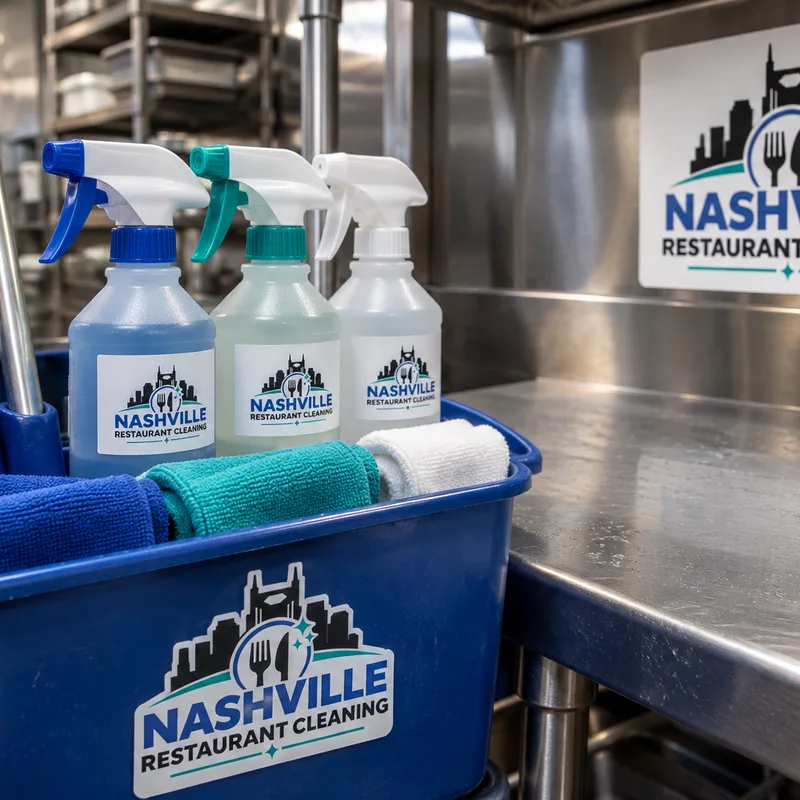
Close view of labeled, color-coded restaurant cleaning tools arranged beside a clean stainless steel work area, with food and utensils absent.
Separated tools and labeled chemicals support consistent cleaning practices.

Walk-through to review

How Our Restaurant Cleaning Process Works

  1. 01

    Walk Through the Restaurant

    We review the kitchen, dining room, restrooms, entry, bar or beverage station, storage considerations, floor materials, and access limits. Managers can point out recurring trouble spots and clarify what employees handle during normal closing duties.

  2. 02

    Define the Scope

    The written scope identifies tasks, service frequency, timing, exclusions, and any periodic detail work. It also notes alarm instructions, key or entry procedures, chemical preferences, and equipment that staff must cool, move, or prepare.

  3. 03

    Schedule Around Operations

    Cleaning is arranged for a workable service window, often after closing, before opening, or during a planned low-activity period. The crew needs enough uninterrupted time to clean surfaces and allow products to remain wet for their labeled contact time.

  4. 04

    Clean in a Controlled Order

    The crew works from cleaner areas toward dirtier ones and generally from high surfaces to floors. Separate restroom equipment and fresh solutions help prevent soil from being carried into food-preparation or guest areas.

  5. 05

    Review and Adjust

    Managers can report changes in traffic, menu production, staffing, or problem areas. The checklist can then be adjusted so recurring visits continue to match the restaurant's actual needs.

Request a Callback
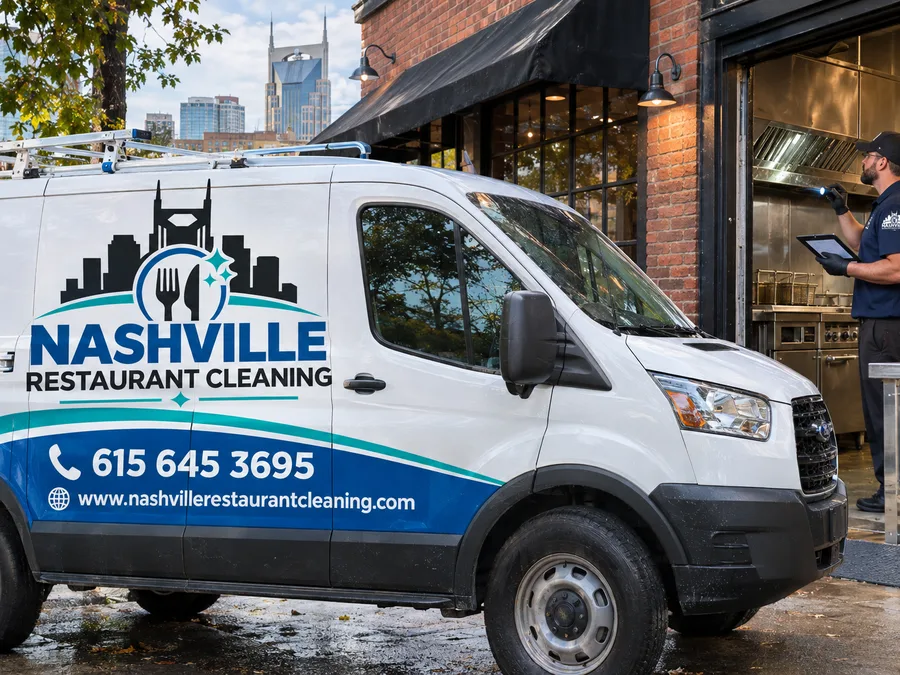
A uniformed restaurant cleaning crew unloading clearly labeled commercial cleaning supplies outside a Smyrna dining establishment after operating hours.

Custom recurring schedules

Recurring Cleaning That Fits Smyrna Restaurants

The right frequency depends on operating hours, cooking methods, daily covers, flooring, and how much cleaning employees complete during each shift. A high-volume kitchen using fryers and grills often needs more frequent degreasing than a lower-volume operation centered on cold preparation. Dining rooms with constant turnover also need more attention to floors, glass, and touchpoints.

Smyrna's commercial corridors create varied service demands. Restaurants near Sam Ridley Parkway may need cleaning plans that account for late hours and sustained guest traffic. Sites close to Interstate 24 may face schedules shaped by commuters and travelers. Operations near the Depot District may require a carefully timed crew because of building access, neighboring businesses, or compact work areas. These factors affect timing and logistics, not the standard of cleaning.

Recurring Restaurant Cleaning Services Smyrna can be arranged around nightly, weekly, or custom task frequencies. High-use floors and restrooms may belong on every visit, while wall washing, baseboards, vents, and spaces behind movable equipment can rotate through a periodic schedule. A task matrix makes those frequencies visible so managers know what is due during each visit.

Request a Callback

A clearly defined proposal

What to Confirm Before Service Begins

A useful proposal should name the rooms, surfaces, tasks, frequency, service window, and exclusions. Broad promises such as “deep clean the kitchen” leave too much open to interpretation. Ask whether the scope covers equipment exteriors, accessible spaces beneath movable equipment, floor drains, wall splatter, restroom fixtures, interior glass, and waste handling.

Preparation responsibilities also matter. Restaurant staff may need to put away food, clear prep tables, secure utensils, empty designated areas, cool cooking equipment, and provide access. If furniture or equipment must be moved, the proposal should state who handles it and whether utility connections limit movement.

Managers should also distinguish routine janitorial work from specialized services. Internal exhaust-system cleaning, pest control, grease-trap pumping, hazardous-material cleanup, and repair work are separate categories. Defining those boundaries protects the restaurant and lets the cleaning crew focus on the approved work.
Request a Callback

Get a written restaurant cleaning scope based on your hours, floor plan, equipment, and busiest service periods.

Call for a Free Quote

Before you schedule

Restaurant Cleaning Smyrna FAQs

How much do restaurant cleaning services in Smyrna cost?+

Restaurant cleaning is usually priced after a walk-through because square footage alone does not show the labor required. Cooking volume, grease buildup, floor condition, restroom count, service frequency, access, and the amount of equipment all affect the quote. A small dining room needing recurring upkeep differs substantially from a full commercial kitchen needing an initial deep clean. Nashville Restaurant Cleaning confirms the exact scope and price after reviewing the Smyrna location.

Can cleaning be scheduled after our Smyrna restaurant closes?+

Yes, service can often be planned after closing, before opening, or during another approved low-activity window. The schedule must allow time for staff to secure food and cool equipment, while cleaners need time to complete the work and observe product contact times. Alarm procedures, access, lighting, and the next shift's arrival time should be confirmed before the first visit.

How often should a commercial kitchen be professionally cleaned?+

The correct frequency depends on cooking methods, volume, employee closing duties, and how quickly grease and soil return. Floors and frequently touched non-food-contact surfaces may need attention on every service visit, while walls, vents, baseboards, and spaces behind movable equipment can follow a rotating schedule. Fryer-heavy operations around Smyrna's busy commercial corridors may require more frequent degreasing than low-volume cold-preparation kitchens.

Do you clean food-contact surfaces?+

Food-contact surfaces can be included when the scope, product selection, and preparation steps are clearly defined. Food, utensils, and open containers must first be removed or protected. The surface is cleaned to remove soil, then treated with an appropriate food-contact sanitizer according to its label, including dilution and contact time. Restaurant management should confirm any equipment-specific cleaning instructions.

Does routine restaurant cleaning include exhaust hoods and ducts?+

Routine cleaning may cover accessible exterior surfaces, but internal hood, fan, and duct cleaning requires a separate specialized scope. Those components collect grease inside the exhaust system and are tied to fire-safety requirements. Managers should confirm whether they need ordinary exterior degreasing or qualified kitchen exhaust-system cleaning before approving a proposal.

What should our staff do before the cleaning crew arrives?+

Staff should secure food, remove or protect utensils, clear agreed work surfaces, cool designated cooking equipment, and provide access instructions. They should also identify damaged fixtures, active leaks, loose electrical components, or equipment that must not be moved. For a Smyrna location with a narrow period between closing and the next shift, completing these steps promptly preserves the full cleaning window.

Can you provide a one-time deep clean before an opening or management change?+

A one-time deep clean can be scoped for an opening, reopening, management transition, or reset before recurring service. The walk-through should identify grease levels, floor buildup, equipment access, utilities, and any construction dust or abandoned material. Specialized exhaust work, repairs, pest treatment, and hazardous cleanup should be arranged separately when required.

Build the right service plan

Plan Reliable Cleaning for Your Smyrna Restaurant

Tell Nashville Restaurant Cleaning about your operating hours, kitchen setup, guest areas, and current problem spots. We will help define a practical scope and service schedule before work begins.

Plan your cleaning

Ready for a Cleaner Restaurant?

Tell us about your restaurant, priority areas, and preferred schedule. We will help define a practical cleaning scope for your Nashville property.

Request a quote

Get a Restaurant Cleaning Quote

After you submit the form, our team will review your details and contact you to discuss the property, scope, and scheduling.