Cook Line Degreasing
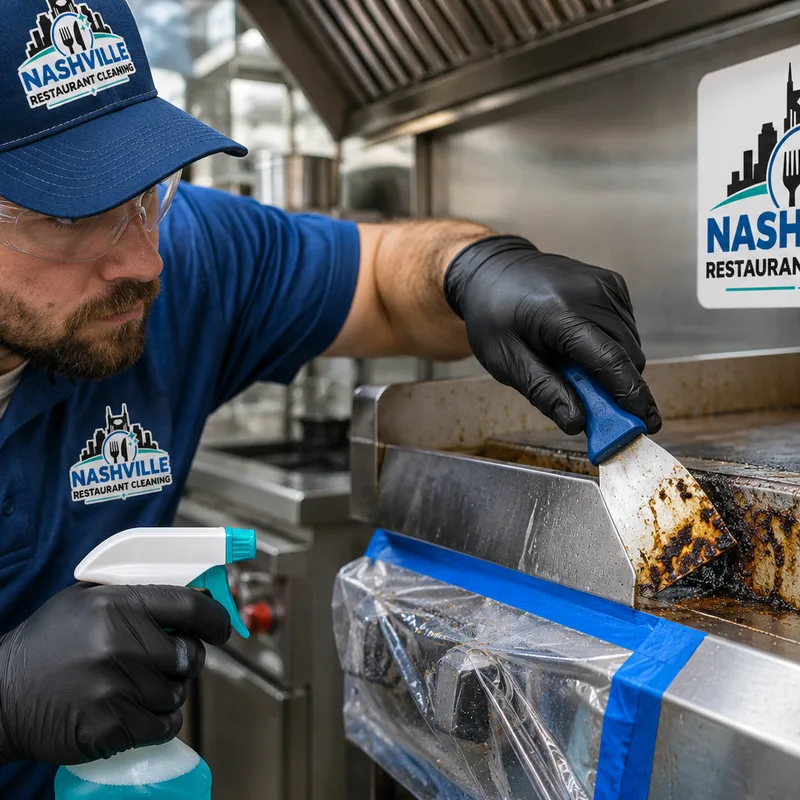
Attention is given to agreed equipment exteriors, splash areas, side panels, removable parts, and accessible spaces where grease and carbon collect.
Restaurant Cleaning · Franklin
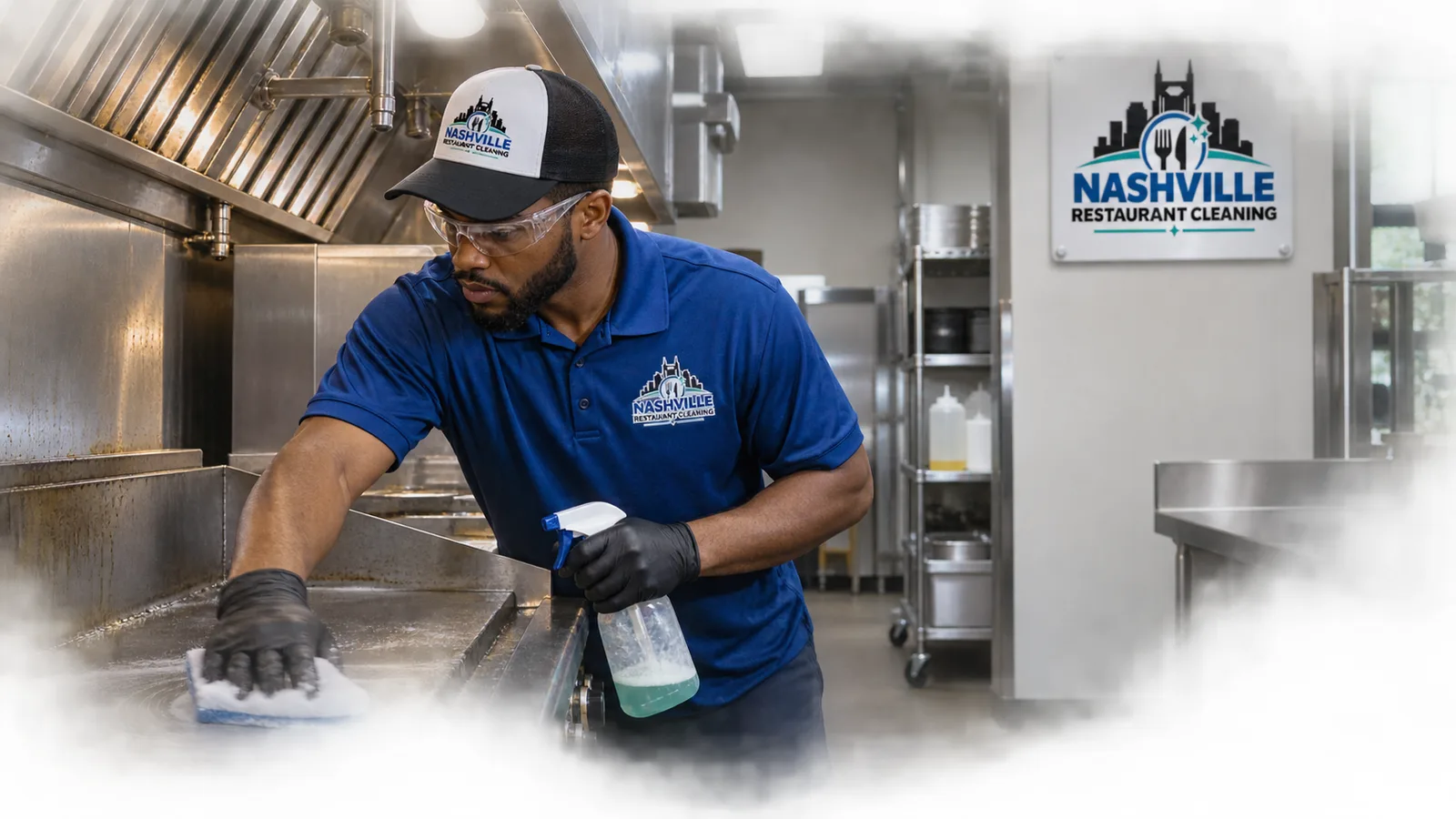
Detailed kitchen and equipment cleaning planned around your operating hours, food-contact controls, and the demands of daily service.
✓Site-specific scope
✓Equipment care
✓Food-contact controls
✓Planned around service
Kitchen-specific planning
Restaurant Cleaning Franklin should support the way your kitchen actually operates. Nashville Restaurant Cleaning builds the work around your equipment, service schedule, high-soil areas, and access requirements. The goal is a documented scope that gives managers a consistent standard instead of leaving the details to each shift.
Grease mist, carbonized residue, food debris, and floor soils accumulate in different places. Cleaning may cover cook lines, stainless steel surfaces, equipment exteriors, prep areas, sinks, walls, floors, and other agreed kitchen zones. Food-contact surfaces require products and procedures suitable for their intended use, including the correct cleaning, rinsing, and sanitizing steps when applicable.
Our team works as a professional restaurant company in Nashville, TN serving nearby Franklin businesses with practical scheduling and a clearly defined scope. Before work begins, we discuss operating hours, sensitive equipment, access, shut-down needs, and the condition of the kitchen. That planning matters whether the property is near downtown Franklin, the Cool Springs commercial area, or along the busy Columbia Avenue corridor.
Care for commercial equipment
Commercial cooking equipment needs more than a quick exterior wipe. Grease and carbon can collect around removable components, control areas, splash zones, casters, legs, and the floor beneath a unit. A proper equipment-cleaning plan identifies what can be safely accessed, what must cool first, and which components require manufacturer-approved care.
The scope may include ranges, griddles, fryers, ovens, steam equipment, stainless steel tables, reach-in units, and other specified fixtures. Electrical components, burners, pilot assemblies, seals, labels, and control panels require care. Technicians should avoid flooding sensitive areas or applying strong chemicals to incompatible surfaces such as aluminum.
Cleaning the visible kitchen equipment is separate from servicing internal mechanical systems or cleaning exhaust ducts. Those tasks may require specialized contractors. We define those boundaries before starting, protect nearby areas, and report conditions that fall outside the agreed work.
Equipment and work zones
Attention is given to agreed equipment exteriors, splash areas, side panels, removable parts, and accessible spaces where grease and carbon collect.
Commercial floor cleaning addresses traffic lanes, corners, edges, and accessible areas under movable equipment. The method is selected for the floor material and soil load.
Sinks, tables, shelving exteriors, backsplashes, and specified prep zones are cleaned with cross-contact controls appropriate to the operation.
When included in the scope, cleaning can cover dining floors, counters, touchpoints, and service stations so front-of-house work follows the same plan.
Deep cleaning can target buildup that routine closing duties do not fully address, including wall-floor junctions, equipment sides, casters, and hard-to-reach surfaces.
A defined inspection process helps verify completed work, note access limitations, and identify areas that may need a revised frequency.
Walkthrough to verification
We review the kitchen and any included dining or service areas with a decision-maker. The walkthrough identifies equipment, surface materials, grease levels, access restrictions, and areas handled by staff or other vendors.
The written scope lists included areas, exclusions, frequency, and timing. Work can be planned outside meal periods or during an agreed closure window to reduce conflict with food preparation and customer service.
Equipment must be shut down and cooled when required. Movable items, food, utensils, and exposed single-use products are handled according to the agreed preparation plan before chemicals or water are introduced.
Technicians work through the assigned zones using the appropriate degreaser, detergent, tools, dwell time, agitation, and rinsing process. Clean tools and task separation help limit the transfer of soil between areas.
The completed work is checked against the scope. Surfaces are left ready for any required sanitizing or operational start-up procedure, and management is told about inaccessible areas, damage, or maintenance concerns observed during cleaning.
Local operating requirements
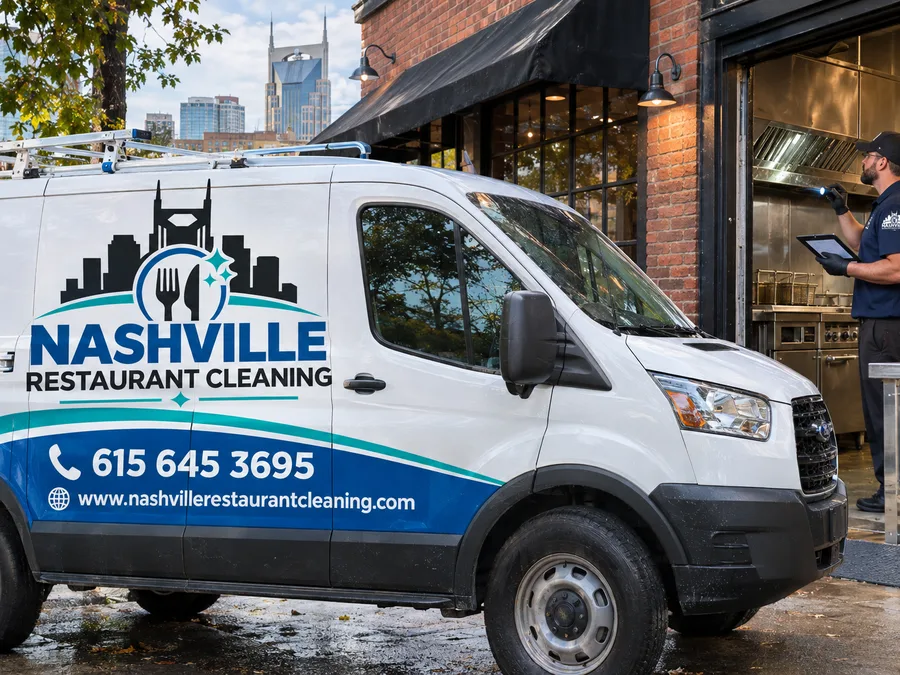
Restaurants in Franklin operate under Tennessee food-safety requirements and local oversight from the Williamson County Health Department. A cleaning contractor does not replace the operator's food-safety plan, employee procedures, pest controls, or required inspections. Professional cleaning supports those responsibilities by addressing the areas and equipment named in the service scope.
Cleaning and sanitizing are different steps. Cleaning removes food, grease, and soil. Sanitizing reduces microorganisms on a properly cleaned surface when an approved sanitizer is used at the correct concentration and contact time. Product labels and equipment instructions determine safe use. Test strips should match the sanitizer chemistry when concentration testing is required.
Franklin's humid summers can add to slip concerns around entrances and service areas when moisture is tracked indoors. Busy restaurant clusters in Cool Springs may also require tight after-hours coordination because shared parking, loading access, and building security can affect arrival and departure. Downtown Franklin properties may have compact back-of-house layouts, so access and equipment movement should be discussed during the walkthrough rather than assumed.
Frequency and scope
The right frequency depends on cooking volume, menu, equipment, operating hours, and the closing work already completed by employees. A fryer-heavy cook line usually develops a different soil load than a café focused on cold preparation. High-use floors and splash zones may need frequent attention, while detailed work behind movable equipment may be assigned to a periodic rotation.
A useful proposal should state which rooms, surfaces, and equipment are included. It should also explain who moves equipment, who shuts it down, whether consumables must be removed, and how access is provided. Ask how chemicals are selected, how food and utensils are protected, and what happens when a surface cannot be cleaned safely without repair or disassembly.
Price alone does not reveal whether two bids cover the same work. Compare scope, frequency, estimated labor, equipment access, exclusions, and the inspection process. A short walkthrough often identifies important differences, such as whether floor edges, equipment sides, wall splashes, and accessible undersides are included or treated as separate detail work.
A cleaner kitchen starts with a specific scope. Arrange a walkthrough to identify priority areas, equipment-care needs, access requirements, and a schedule that fits service.
Call for a Free QuoteBefore you schedule
Restaurant cleaning in Franklin is priced according to the facility, soil level, frequency, access, and included equipment. A compact kitchen needing routine floor and surface work takes less labor than a large cook line with heavy grease, carbon buildup, and equipment that must be moved. After-hours access, first-time restoration work, and detailed cleaning under or behind equipment can also affect the quote. A walkthrough is the best way to confirm the exact scope and price.
Yes, restaurant cleaning can usually be planned for an agreed off-hours window when the kitchen is inactive. The schedule must allow hot equipment to cool and give technicians enough time to work before opening procedures begin. Franklin restaurants in shared Cool Springs properties may also need to coordinate building access, alarms, loading areas, or security with property management.
Restaurant equipment cleaning can include agreed exterior surfaces, removable components, splash zones, legs, casters, sides, and accessible areas beneath or behind units. The exact list is established during the walkthrough. Internal mechanical repair, electrical work, exhaust-duct cleaning, and disassembly that requires a service technician are generally separate tasks unless specifically included by a qualified provider.
Some equipment must be shut down and fully cooled before safe cleaning can begin. The written plan should assign responsibility for disconnecting, moving, and restarting each unit because weight, gas connections, electrical connections, water lines, and manufacturer requirements can limit movement. Technicians should never force equipment away from fixed utilities merely to reach a concealed area.
Food-contact surfaces may be included when the scope and procedures are agreed in advance. These surfaces must be cleaned with suitable products, rinsed when required, and sanitized according to the product label and the restaurant's food-safety procedures. Food, utensils, and single-use items should be removed or protected before work begins.
Deep-cleaning frequency should be based on actual soil buildup, menu, cooking volume, equipment arrangement, and the restaurant's daily cleaning program. High-grease areas may need a shorter interval than storage or low-soil zones. A rotation can assign cook-line details, floor edges, walls, equipment sides, and accessible undersides to different visits while keeping high-risk areas on the appropriate schedule.
Professional cleaning can address physical cleanliness, but it cannot guarantee an inspection result. Williamson County food-service inspections also consider food temperatures, employee practices, handwashing, storage, sanitization, pest control, and equipment condition. Restaurant management remains responsible for regulatory compliance and daily food-safety controls.
Define the next cleaning
Tell Nashville Restaurant Cleaning about your kitchen, equipment, operating hours, and problem areas. We will help define a practical scope and schedule before the work begins.
Plan your cleaning
Tell us about your restaurant, priority areas, and preferred schedule. We will help define a practical cleaning scope for your Nashville property.
Request a quote
After you submit the form, our team will review your details and contact you to discuss the property, scope, and scheduling.