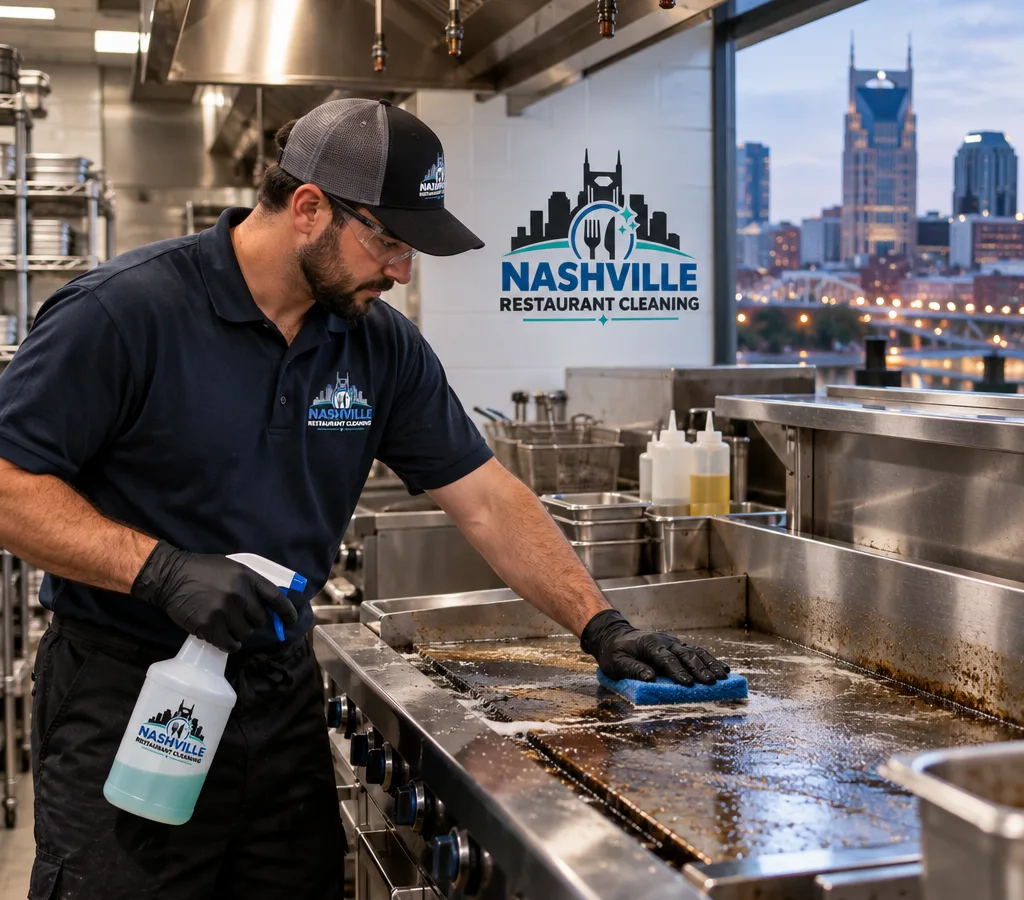
Cooking Line Degreasing
Removal of built-up grease and food soil from accessible surfaces on ranges, fryers, griddles, ovens, salamanders, and surrounding stainless steel. Equipment is treated according to its finish and manufacturer restrictions.
Kitchen Cleaning · Nashville
Detailed commercial cleaning for cooking equipment, exhaust systems, floors, walls, and the high-use areas that keep a restaurant kitchen working.
✓Site-specific scope
✓Equipment and surfaces
✓Hood scope available
✓Scheduled around operations
Kitchen-specific planning
Kitchen Cleaning Services should address the grease, carbon, food residue, and soil that routine closing work cannot fully remove. Nashville Restaurant Cleaning develops each scope around the equipment, surfaces, access limits, operating schedule, and current condition of the kitchen.
Our work may cover cooking lines, equipment exteriors, accessible areas behind and beneath appliances, prep surfaces, walls, floors, drains, and exhaust components. The exact scope is documented before work begins. As an experienced restaurant team in Nashville, we plan the work around restaurant operations, protect nearby surfaces, and identify any equipment that must be cool, disconnected, or moved by authorized personnel.
That planning matters in kitchens serving areas such as Broadway and The Gulch, where late operating hours can leave a narrow service window. Restaurants in East Nashville may have compact kitchens with tight equipment spacing, while larger operations near Opryland can require multiple work zones and a staged approach. The service plan should fit the actual kitchen rather than force every property into the same checklist.
Removal of built-up grease and food soil from accessible surfaces on ranges, fryers, griddles, ovens, salamanders, and surrounding stainless steel. Equipment is treated according to its finish and manufacturer restrictions.
Detailed cleaning of equipment exteriors, legs, casters, sides, splash zones, and reachable areas underneath. Moving or disconnecting appliances is agreed in advance because utility connections and equipment weight affect access.
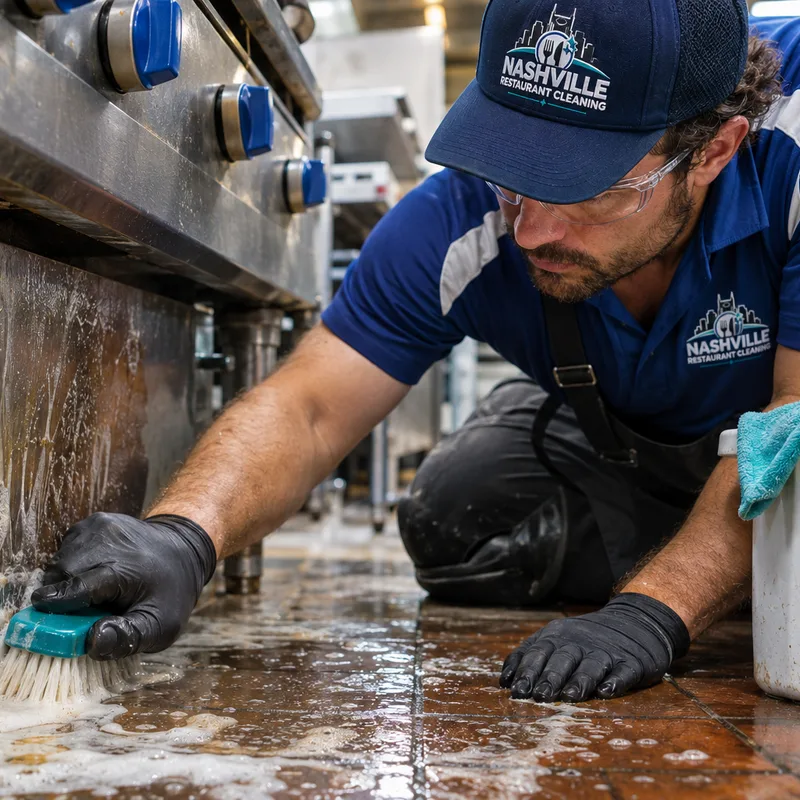
Degreasing targets quarry tile, grout lines, washable wall surfaces, floor edges, and accessible drain areas. The method is selected to control wastewater and avoid spreading soil into dining or storage areas.
Cleaning can include empty prep tables, shelving, sinks, backsplashes, and reachable surfaces in dry or refrigerated work areas. Food, utensils, and removable supplies must be cleared or protected before treatment.
Restaurant hood cleaning may include filters, hood interiors, plenums, ducts, and exhaust fans when those components are included in the written scope and can be accessed safely.
A commercial kitchen deep cleaning can focus on a neglected line, an equipment change, a reopening, or a scheduled reset. This lets operators address the highest-priority areas without assuming every kitchen needs identical work.
Beyond routine closing work
Daily cleaning handles fresh spills and loose food debris. Professional kitchen cleaning addresses adhered grease, baked-on carbon, soil along equipment edges, and residue in areas that are difficult to reach during normal closing duties.
A thorough job starts by identifying surface materials and soil conditions. Stainless steel, painted metal, aluminum, quarry tile, grout, rubber coving, and sealed wall panels do not all respond the same way to heat, dwell time, agitation, or alkaline degreasers. Sensitive controls, pilot assemblies, electrical components, and food-contact surfaces require particular care. Chemical labels and safety data sheets guide dilution, use, and rinsing.
Nashville's humid summers can make overnight work physically demanding and can slow drying in poorly ventilated spaces. Air movement and realistic drying time should be included in the plan, particularly when floors must be ready before an early prep shift. A responsible kitchen cleaning company also manages hoses, cords, wet floors, and equipment access so the work area remains controlled.
Exhaust-system scope
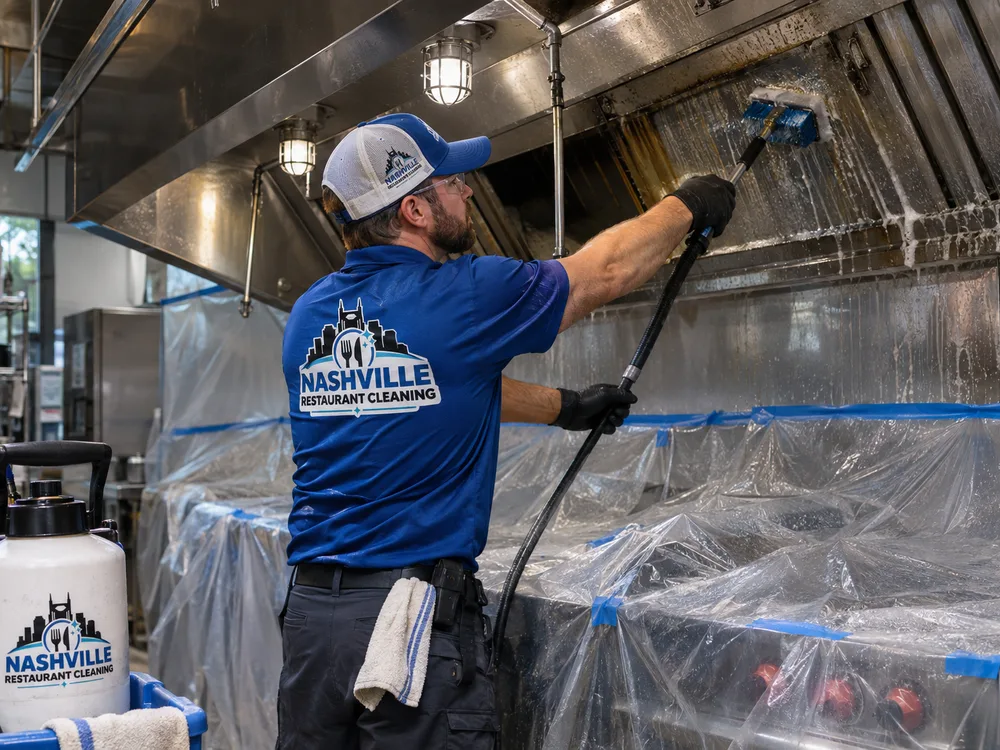
A kitchen exhaust system carries grease-laden vapors through the hood, filters, plenum, ductwork, and fan. Effective hood cleaning in Nashville requires access to the full included system, not a cosmetic wipe of visible stainless steel. Technicians typically protect the cooking line, contain wastewater, remove and clean filters, apply an appropriate degreaser, agitate deposits, and rinse accessible components.
The National Fire Protection Association's NFPA 96 standard addresses ventilation control and fire protection for commercial cooking operations. Cleaning frequency depends on the cooking process and grease accumulation, so a high-volume solid-fuel operation may need attention more often than a kitchen with lighter-duty cooking. The authority having jurisdiction, fire-suppression contractor, insurer, landlord, or equipment documentation may also affect an operator's requirements.
Restaurant hood cleaning in Nashville should be scoped separately from general line cleaning when duct access, rooftop fan access, roof protection, or exhaust-system documentation is required. Ask whether the proposal covers the hood canopy only or the accessible plenum, duct, fan, filters, and surrounding work area as well.
Assessment to verification
We review the cooking line, equipment arrangement, surface materials, exhaust access, utilities, soil level, and timing restrictions. Priority areas and exclusions are recorded before scheduling.
The kitchen removes or secures food, utensils, and portable items. Our team establishes containment, protects sensitive surfaces, confirms that designated equipment is cool, and sets up safe access.
Cleaners apply products suited to the surface and soil, allow controlled dwell time, agitate deposits, and remove residue. Work proceeds by zone to reduce cross-contamination and keep hoses and wet areas controlled.
Included surfaces are rinsed or wiped as required, excess water is collected, and the work area is allowed to dry. We review the completed scope and identify any inaccessible area or maintenance concern that affected the work.
Local scheduling realities
The best service window depends on prep times, closing duties, deliveries, building access, and the amount of drying required. A late-night Lower Broadway kitchen may need work divided into zones after a long service, while a lunch-focused operation in Green Hills may have a more practical evening window. In Germantown, older converted commercial spaces can present narrow access routes or limited staging space, which affects equipment movement and hose placement.
Before the appointment, operators should remove food and smallwares from the agreed work area, empty specified shelves, and identify equipment that cannot be moved. Gas, electrical, water, and fire-suppression components should be handled only by people authorized for that task. Roof access for exhaust work must also be confirmed before arrival, including any building-management requirements.
Our base at 2945 Armory Drive, Suite 4, Nashville, TN 37204 provides a local point of contact for restaurants seeking Commercial Kitchen Cleaning Nashville operators can schedule around production. A written proposal should state the included zones, equipment, exhaust components, access assumptions, preparation duties, and expected service window.
Choosing a cleaning team
The proposal should name the equipment and surfaces being cleaned. Terms such as “deep clean” are too broad unless the included work is described.
Ask how cleaners handle stainless steel grain, aluminum components, painted surfaces, electrical controls, food-contact areas, and heavy carbon deposits.
Confirm who moves equipment, who handles utility disconnection, whether rooftop access is needed, and which areas must be emptied before the crew arrives.
Containment, floor protection, wastewater control, and protection for nearby equipment should be part of the plan, especially when the kitchen shares access with occupied areas.
The service window should allow time for setup, cleaning, rinsing, drying, and review before the next prep shift begins.
A clear scope makes commercial kitchen cleaning easier to schedule and evaluate. Tell us which equipment, exhaust components, and high-use areas need attention, and we will help define the work before it begins.
Call for a Free QuoteBefore you schedule
Pricing depends on kitchen size, grease and carbon buildup, equipment density, access, and whether exhaust-system cleaning is included. A targeted cooking-line clean costs less than a full kitchen and hood project. An accurate proposal requires a review of the included surfaces, equipment, service window, preparation duties, and rooftop or duct access.
A focused equipment or floor service may fit within one overnight window, while a large kitchen or heavily soiled exhaust system may require a longer visit or staged work. Nashville restaurants with late closing and early prep shifts often benefit from dividing the kitchen into priority zones. Setup, containment, rinsing, and drying all need time.
The schedule should be based on cooking volume, menu, equipment type, visible accumulation, and operational requirements. Frying, charbroiling, wok cooking, and solid-fuel cooking can create different soil and exhaust conditions. Daily staff cleaning remains necessary between professional visits, while exhaust frequency should reflect NFPA 96 considerations and applicable requirements.
Hood cleaning is included only when the proposal specifically lists the exhaust components to be cleaned. Confirm whether the scope covers filters, hood interiors, plenums, accessible ductwork, rooftop fans, and cleanup. A general kitchen clean may address the canopy exterior without cleaning the complete exhaust path.
The active work zone generally must be out of production, cool enough to service, and cleared of exposed food and utensils. Some large kitchens can remain partly operational when cleaning is divided into isolated zones, but heat, grease, water, chemicals, and hose placement make simultaneous cooking unsafe in the immediate area.
Preparation depends on the agreed scope and the equipment involved. Staff can usually remove smallwares, food, and portable items, but heavy appliances and utility-connected equipment need advance planning. Gas lines, electrical connections, fire-suppression components, and fixed equipment should be handled only by authorized personnel.
The proposal should identify the work zones, equipment, surfaces, exhaust components, preparation duties, exclusions, access needs, and expected timing. It should also state whether equipment movement, rooftop work, wastewater containment, and post-cleaning review are included. This gives Nashville operators a practical basis for comparing scopes.
Define the next cleaning
Share the kitchen layout, priority areas, operating schedule, and any hood or equipment concerns. Nashville Restaurant Cleaning will help establish a practical scope and service window for your operation.
Plan your cleaning
Tell us about your restaurant, priority areas, and preferred schedule. We will help define a practical cleaning scope for your Nashville property.
Request a quote
After you submit the form, our team will review your details and contact you to discuss the property, scope, and scheduling.